Christianity and Physicalism
01 Introduction
Physicalism and religions are thought to be incompatible. This is because, at first sight, physicalism is a worldview that only physical things exist whereas most, if not all, religions postulate non-physical entities, viz., spirits. So the latter include in their world what the former does not allow. To the extent that science presumes physicalism, it comes down on this view to science versus religion, more dramatically, reason versus faith. I think that this is a false dilemma. In fact, not only are they compatible, but they compensate each other. Where reason fails to illuminate, faith points towards where to look at. But faith can do so only by standing on the ground laid out by reason. In this essay, I will examine the metaphysical presumption of religion, particularly Christianity, and dispel the appearance of the tension between physicalism and Christianity. The outcome is the view that Christianity is a form of virtue ethics, spirituality is the ethos of its moral outlook, and morality is the functional aspect of the survival strategy of individuals out of the state of nature. As such, Christianity along with morality is naturalized, and its further implication is that community is at the center of one’s identity as a believer.
02 Tension
Initially understood, physicalism is the view that only physical things exist. This definition is ambiguous. What does it mean for things to be physical? Furthermore, what does it mean for things to exist? One may say that what it is for a thing to be physical is for this thing to be tangible, or more precisely, for this thing to be such that one could experience it with bodily senses. But this is still too broad. Of course, we could sense what is sensible. This is a mere tautology. However, that means spirits are either sensible or insensible. If sensible, they are after all physical things. Yet, that again just means that spirits are sensible because we can sense them. So are tables and chairs and trees! There is no metaphysical difference between spirits and objects to motivate any tension between religion and physicalism. If insensible, spirits are something of which we cannot claim existence: how could you say of X that X exists if there is no way for us to confirm this fact? Worse, our word ‘spirit’ does not have any meaning at all, only a babble! After all, what could we say anything meaningful about whose being (mode of existing) we cannot say anything?
Likewise, there does not seem to be anything substantial to the initial way the tension is felt between religion and physicalism. If there indeed is a tension, its intuition must be much deeper than expected. One helpful way of explicating the tension is by utilizing possible world semantics. Here is how David Lewis explains it (Lewis). Let us say that a world is a complete collection of things that exist. Inside the world, each thing has a property: a tree is tall, a table is brown, etc. Some properties are more natural or fundamental than the others: the property of having the length of lightwave between 620 and 750 nm is more fundamental than that of being red, the property of being a molecular bond of two hydrogen atoms and one oxygen atom is more fundamental than that of being transparent and fluid. Think of properties as sets, or ways of grouping individual things. What it is for X to be a dog (to have the property of being a dog) is that X is (to be) grouped together with one collection of individuals rather than another (e.g., cats). On occasions, it may be contextually appropriate to group a particular dog with a toy rather than with other dogs—for instance, if the task is to group that dog with what it likes to play with rather than with organisms it is genetically similar to. Yet, the group or property of doghood is more natural or fundamental than alternative ways of grouping. Call those fundamental properties (whatever they turn out to be) ‘natural properties.’ In principle, non-natural (or less natural) properties are reducible to natural properties as non-natural properties are less fundamental to how things really are. Non-natural properties are included mostly for practical purposes. For instance, it is more useful in many contexts to talk about things in terms of color than of lightwave lengths or to talk about things in terms of economic values, biological functions, etc. than of subatomic particles. Thus, the world is composed of things and natural properties (to which non-natural properties although included for practical purposes are reducible).
In this world, tigers are carnivores, Sacramento is the capital city of California, and Obama was the President. But could it not have been that tigers were herbivores, Sacramento were the capital city of Oregon, and Obama were a CEO at Nvidia? We can imagine them, and they are certainly possibilities. Accordingly, the world itself must have been such that these possibilities hold: the evolution of species, the expansion of the US territory, and the development of techhubs must have taken different paths. The world in which these possibilities hold have its own things and ways of grouping them together. Call the first world (our world) actual world and its alternative possible world. Now, we have two worlds, two collections of things and properties. But did we not initially define the world as a collection of things that exist? Either everything (President Obama as well as CEO Obama) exists and belongs to the same world or possible things do not exist and there is no possible world; either way, there is only one world. To address this problem, there are two ways to maintain multiple worlds. First, we admit that only the things (and their properties) in the actual world exist. The actual world is how things really are, and the possible worlds are how things could have been. The possible worlds (more precisely, the ways things could have been) do not exist, but this poses no problems because, by world, we only mean how things could have been rather than whether things exist; how things are is one of many ways how things could have been. Call this interpretation Ersatzism. Second, both worlds do concretely exist. At any rate, possible worlds persist in the same manner the actual world does. Each world has its own things and the ways these things are. These worlds nevertheless do not collapse into one mega-world because there is no interaction between the worlds: each world is separate from the others. One cannot get from one world to another; possible worlds are not multiverses between which one could make quantum jumps; “quantum” is only a property within a world. What then is the relationship among the things in one world that they lack in relation to the things of other worlds? This would be a causal relation. President Obama, carnivore tigers, and Californian Sacramento could causally interact with one another, but they cannot with CEO Obama, herbivore tigers, and Oregonian Sacramento. On this view, worlds are collections of things that exist, and there could be multiple worlds as such. Call this interpretation modal realism. For our purpose, it does not matter which interpretation of possible world semantics is true. What matters is that we can conceptualize multiple worlds and their occupants as well as properties, the ways things are or could have been in relation to one another.
Now, we have enough metaphysical resources to examine the intuition behind the tension. There can be three ways in which two worlds are different. First, worlds can have different things or occupants. World A may have Obama and Trump, but World B may lack one or both. Second, worlds can have different natural properties. On the premise that being composed of two hydrogens and one oxygen is a natural property, World A and B may both have the thirst-quenching transparent liquid, but with different molecular make-ups: H2O vs. XYZ. That is, the fundamental ways of grouping things in B are different from that in A. Third, worlds can have different non-natural properties. World A and B may both have Obama and H2O, but Obama may be a CEO rather than the President in B. Being President is a socio-political property, not a natural property. In principle, being President could be re-articulated purely in terms of more fundamental properties, albeit at the cost of being less useful for socio-political purposes such as describing elections or executive orders. What really differentiates two worlds at the fundamental level is the difference in natural properties. World B may lack an occupant or two, but may still be of the same kind of world as World A insofar as natural properties are concerned. Maybe, for some reason, Trump was not born or conceived. Yet, that does not necessarily make B a world that operates on different laws of nature and causal orders than A. The same goes with differences in non-natural properties, for it may be of pure accidents that occupants in B have never felt the practical need to conceive things in terms of President. The differences in natural properties, however, distinguish worlds at the fundamental level. If two worlds are different in the sense that they do not share the same fundamental ways of grouping things, they are different in a significant way—operating on different laws of nature and causal relations. World B could still be a copy of World A even if their occupants and non-natural properties are different, just not a perfect copy—CEO Obama still interacts with Oregonian Sacramento in the same causal way that President Obama does with Californian Sacramento. However, if A and B are different in natural properties, they cannot be copies of each other (to the extent that their natural properties are different). They could appear to be similar, for example if H2O and XYZ both serve the same function of quenching thirst in their own world. But this similarity is a pure accident whereas the similarity between CEO Obama and President Obama is based on the fundamental ways their worlds operate.
On physicalism, the world is fundamentally physical. In this view, the only natural properties of our world are physical properties. On religions, the world is fundamentally spiritual or, at least, more than just physical: some, if not all, natural properties are spiritual properties. But what is it for natural properties to be physical? Again, if by physical, we just mean tangibility or perceivability by bodily senses, we run the risk of mere tautology or collapsing spirituality to physicality. The merit of calling something “physical” is that, by categorizing it as such, one could assert that there could be a definite way of talking about it. In other words, some ways of talking about this thing are better than others. If I call something brown, I mean to categorize it in such a way that talking about it in terms of hue, brightness, etc. is better than in terms of odor. Accordingly, there are proper methods for describing and explaining brown—the language-game of color. The proper methods for describing and explaining things in terms of physical properties consummate into what we call the scientific method, the method by which we talk about empirical entities. Science as an explicatory framework for understanding things around us provides us with a way of talking about them, and what it is for something to be physical is that it is viewed as being subject to the method of science. This method operates on or presupposes a few inductive principles: uniformitarianism, repeatability, law of parsimony, etc. What it is for a statement (or judgment about something) to be empirically true is for it to be assertible by the principles of the scientific method. Physicalism is our inference to the best explanation based on a number of principles that are deemed to be reasonable (or, more strongly put, make reasoning possible). What it is then for some world to be fundamentally different from our world in such a way that they are not physical is that the way this world persists and works is not explainable by science (i.e., by assuming the inductive principles). Consequently, what it is for religions to claim that our world is spiritual or is not merely physical is that some, if not all, parts of this world are not explicable by science alone. To the extent that science is based on inductive principles, and these principles lay out what is reasonable, spiritualism claims that some parts of our world are not reasonable, i.e., not to be explained by reason, in other words, are beyond reason.
If reason cannot direct us in navigating (some parts of) the world, what can? There are two possible attitudes. First, one could be nihilistic and admit that our world is partly beyond reason and we simply cannot access these parts at all. Second, one could posit that there are ways of accessing and navigating these unreasonable parts: we (at least some of us) have a special faculty (call it spirit, soul, sixth sense, etc.) specific for the purpose of accessing spirits. Whether one is exercising this faculty right or whether this faculty is real, in this view, cannot be examined by the scientific method precisely because the subject and reality of this faculty are inaccessible by reason or by the assumption of inductive principles. According to religion, what physicalism identifies as the actual world is not our world, but another possible world: there may indeed be a world where the only natural properties are physical, and such a world may even concretely exist, but this is not our world! Whereas physicalism assures that science is all we need to describe and explain, thereby navigate, our surroundings (because the world is only composed of things that are conceptually capturable by science), spiritualism (or religion) postulates that there are things and phenomena that are in principle inexplicable by science, thereby asserting that one requires a special faculty to navigate in some parts of the world. To accept the reality of (the worldview that is accessible only by) such a special faculty is a matter of faith and not of reason (i.e., one just accepts it without asking why) because no inductive principle (no ground for answering why) can make use of this faculty for navigating the parts of the world the principle is assumed or summoned to deal with. The tension then is at whether we should postulate matters that are beyond what we can reduce to and explain by science.
03 Problem of Spiritualism
Here is the argument of spiritualism (or religion): there are spiritual things (or some things have spiritual properties), and by definition spirituality is beyond reason (or human understanding), therefore no argument based on reason can disprove the reality of spiritual things. This argument is logically immune to any criticism (and this is not a good thing!). The very activity of proving or disproving something is reasoning. In (dis)proving, judging, or evaluating the truth of a statement (or claim), one makes inference from principles as premises to a conclusion. In deductive reasoning, the principles are based on logical or mathematical axioms. In inductive reasoning, the inductive principles provide a framework for interpreting data and thereby judging certain claims to be factual. By defining spiritual matters to be beyond reason, one is posing that statements about spirits are simply not disputable. But here is an immediate problem. If we cannot talk and reason about, examine, and describe spirits by any scientific measure (since we can dispute spiritual matters if we can by science), what do you mean by ‘spirit’? What exactly are you referring to, pointing at, gesturing towards, and having your attention to when you utter the sound ‘spirit’ or when you say that you are now exercising the special faculty for the spiritual phenomena? You claim to have accepted the truth and reality of (the statements about) the spiritual reality (or the parts of the world that are spiritual). But how could you in any clear conscience really believe that what you are doing when you utter ‘spirit’ or claim to be exercising the special faculty is meaningful in any sense if you cannot refer to, point at, gesture towards, or have your attention to it? If you can refer to, point at, gesture towards, and have your attention to it, then it seems to be subject to our ordinary means of dealing with the surroundings, thereby science—for the inductive principles are the very principles by which we interpret what we are doing as referring to, pointing at, gesturing towards, and having our attention to in the first place. So it seems that a spiritualist is either babbling or cheating the game of reasoning.
When we think of a world, its occupants and properties, i.e., when we think of what exists, what we are doing is determining what to include in our ontological list, the list of what has the value of being talked and cared about. Each way of talking and caring about an entity has its own inferential pattern and a corresponding behavioral regimen. If my list includes phlogistons and ethers, how I behave around heating and falling objects will be different from if it were to include oxygens and lightwaves. On one list, I cannot create rockets and radios; on the other, I can. The metaphysical business of figuring out which ontological list to adopt has a significant practical outcome. The question of whether to think of our world as composed only of physical things or also of spiritual things is precisely this very metaphysical business, and the difference in their practical outcomes is clear: the leader of a company or a nation may decide to consult a data scientist or a fortune teller, depending on their metaphysical belief, i.e., on their ontological list (and we all know which choice is the only right one…).
Here is a lesson from the history of philosophy in the debate on dualism, the philosophical view that mind is a substance of its own separate from body—a view that Descartes popularized. In our terms, dualism is the view that some of the natural properties of the actual world are mental in the sense that these properties cannot be described and examined by natural science. This view famously faces the following challenge: if mind and body are two separate substances, then how could they (causally) interact with each other? The (not so false) dilemma is that if mind and body can interact, then they are subject to the same laws of nature, therefore are both examinable by natural science, but if they cannot interact, then will and emotion have no effect on our bodily movements (and vice versa) and their correspondences are pure coincidences, which is not only absurd, but also has serious implications about social justice. Thus, the contemporary thought is that the physicalist reduction of mind (to neuroscience) must be largely correct as a philosophical project even if we cannot come up with a good reductivist theory for the time being. (Physicalism faces the challenge of accounting for freewill, but this is less of a problem than the problem of dualism as philosophers have a viable philosophical project to deal with it: compatibilism.) One may attempt to defend dualism by the same kind of argument that spiritualists employ: there are minds, and by definition minds are beyond natural science, therefore no argument based on natural science can disprove minds. But what is precisely at issue is why one should accept the primary premise of this very argument: there are minds (at least in the sense of there being things whose existence natural science cannot describe). That is, the very question is why we should include minds in the ontological list. Whether to include something in the ontological list cannot be settled by empirical methods because ontological listing is a meta-empirical activity; determining whether to include some entities in the list is deciding how to interpret the very content of our experience that becomes the subject of empirical studies. When I experience quenching of thirst, should I interpret it as the result of drinking water or of being blessed by the grace of Martians? The answer varies by what entities and properties I have in my ontological list, and the practical outcome is different: either I will be actively searching for water or dance around fire to impress Martians. If I believe that the quenching of thirst was due to the blessing of Martians, you cannot convince me otherwise by showing me water: what you call ‘water,’ I call it ‘Martian blessing,’ and I will be acting very differently in front of it. This is precisely how cults and conspiracy theories persist despite counter-evidence, for what their followers consider as evidence is disparate from what most of us consider as they have a different ontological list. The determining factor of what to include in the ontological list is the pragmatic value of the item, the judgment about which way of interpreting the content of one’s perception is more practical for the end of a specific task; if my task is to survive in a desert, then my ontological list was a bad one—but its truth is not to be determined by the fact that water and not Martial blessing is what quenches my thirst. Put in Kuhn’s terms, different ontological lists, or conceptual frameworks, pose different paradigms whose truth cannot be settled by empirical investigations because those investigations—in order to function as investigations—presuppose the very paradigms (Kuhn). The determining factors for deciding which paradigms to go with, thereby which investigations and behavioral commitments to take, can only be pragmatic. Quine highlights this point by contending that objects and gods are on a spectrum in deciding which concept to use for interpreting our experience although he thinks that objects are more factual or real than gods because employing the concept of object better explains natural phenomena, i.e., renders more coherent content for our perceptions overall (Quine). The concept of factuality, reality, or existence is likewise intertwined with the pragmatic value of a conceptual item in the theoretical enterprise of explaining nature.
This does not mean that truth is relative and anything goes. Some explanations are objectively better than others. Practical problems presuppose what works, and instrumental values are not arbitrarily settled. What this picture rather implies is that rationality is about choosing a better explanation (for the purpose of solving relevant problems) rather than merely accepting facts. One may wish to continue maintaining that what quenches thirst is Martian blessing and not water despite failing to solve the problem of being thirsty through dancing by fire. On relativism, that there exists Martian blessing is true regardless of whether one has successfully quenched thirst by believing in it. But, on pragmatism, the belief in Martian blessing is false, and its falsity is exposed by its failure in the relevant task. On this note, Martian blessing does really not exist, and this is a matter of hard fact. Similarly, the question of whether dualism is true is a matter of fact, and whether it is factually true (i.e., whether it is appropriate to include minds in the ontological list) is to be determined pragmatically. The problem with this pragmatic approach is that it takes time for something to show its pragmatic result and that, when the pragmatic result shows, it is often difficult to interpret the pragmatical value of the item. That is, the pragmatic value (and its corresponding theoretical truth) may be underdetermined (temporarily or permanently due to human conditions). Yet, there is the need to commit to a specific pragmatic program, to a specific ontological list, rather than the others. The guiding principle in spite of underdeterminism is Occam’s razor (principle of parsimony), the conceptual heuristic stating that, in choosing among competing explanations, one must choose the explanation with fewest assumptions. The reason for this heuristic is that, the fewer assumptions there are, the more economical the explanation is, and the more efficiently we can make use of it for pragmatic purposes. Thus, when the pragmatic values and theoretical truths are underdetermined, it is rational for us to be committed to (i.e., bet on) the ontological list that postulates less entities. Accordingly, even if the pragmatic (dis)advantages of dualism are underdetermined, we should avoid postulating mind as a substance unless there is a compelling pragmatic reason to do so.
There seem to be various strains of spiritualism. Some spiritualists seem to identify the special faculty with the mind of dualism, viz., soul. For this strain, the actual world has one more natural property on top of physical properties, and this additional property is mental, or soulish. Meanwhile, some other spiritualists postulate spirit in addition to soul, presenting a tripartite picture of human: body, soul, and spirit. For this strain, the world has three natural properties: physical, mental, and spiritual. In their view, the mind (or soul) is not apt for accessing the spiritual world; one must use another special faculty, viz., spirit. Remaining spiritualists are idealists, for they claim that everything is mental (or spiritual). Of all three, by Occam’s razor, the idealists are most rational, followed by dualists and then trialists. However, in terms of how much they deviate from physicalism, dualists are least radical, followed by trialists and then idealists. Both spiritual dualism and trialism inherit the same philosophical problem as academic dualism: if spirit is a substance, how could it causally interact with the rest of the world? Spiritual idealism inherits the same problem as academic idealism: if everything is mental (or spiritual), what provides the standard of correctness when two different minds or spirits have different experiences? Overall, it seems then that, if one is to be a spiritualist, it is most appropriate to be a dualist, followed by either trialist or idealist, depending on which between academic dualism and academic idealism is less problematic. This ranking presupposes that physicalism is the rational default: it is the most rational view by Occam’s razor: if one were to postulate only one type of entity, they should postulate physical rather than mental. The question then is why. The reason why physicalism (and not idealism) is the rational default is because it is most natural for us to believe that there exist objects whose spatiotemporal positions and trajectories are initially not up to us: it is not the case that a table is in my room just because I wish it—I must physically move it from one place to another; in this way, physicalism does not encounter the problem faced by idealism. Now, one may object by arguing that it is then also natural to think that there are objects and there are our minds as well, so why not dualism. Here is a theoretical reason to give more weight to physicalism. What is more natural to us gives us the initial place to start. We have to start from somewhere, and this starting point includes physical properties. Thus, idealism is eliminated. But the natural starting point does also include minds. However, this is merely a starting point, not the finish-line. Considered as a potentially viable metaphysical view, dualism faces various challenges, one of which is the problem of accounting for the causal interactions between mind and body. This challenge motivates us to consider mental properties as mere appearance of how things really are whereas how things really are is either that minds are reducible to physical objects (physicalism) or physical objects are reducible to minds (idealism). Idealism is eliminated from (or has lost a score at) the get-go. By the scoreboard, then physicalism is the most rational commitment even if the pragmatic value of each of the metaphysical views is underdetermined. Historically, physicalism did for a while face the challenge of accounting for freewill in a deterministic world. However, this problem is not as devastating as the challenge faced by dualism. We simply have not unraveled the concept of freewill enough to determine whether freewill is incompatible with physicalism whereas the problem for dualism is clear from the start that the very concept of mind as a substance is incompatible with our natural inclination to believing that our will can make causal changes in the physical world. The weights of the challenges faced by physicalism and dualism are asymmetrical. Thus, even if we do not take into account the pragmatic values of physicalism (e.g., scientific and medical advances), it is most rational to commit to physicalism as the default in determining which ontological list to adopt. For this reason, spiritualism along with idealism and dualism must be dismissed, and one should not accept the primary premise of the argument in favor of spiritualism: here are spiritual things (or some things have spiritual properties). Per physicalism, it is most rational to believe that the physical world (in which the only natural properties are physical) is the actual world and that there does not exist anything beyond what science can provide explanations for. Differently put, physicalism has the priority in the market of metaphysics, and the burden of proof is on its alternative views; this burden is very heavy, and the inclusion of new items in the list is not cheap at all.
04 Spirituality as Morality
Although spiritualism as a metaphysical view must be rejected, we must be charitable to the intuition that there is something more to the world than mere physical things. After all, do we not love and care for each other? Do we not feel angry or happy? Do we not have the experience of red which is not redness itself? Do we not have consciousness? There are various physicalist accounts for consciousness, but the specific account I will present here is a metaethical one.
Just because we can label something does not mean that the label refers to something that really exists. Take unicorns as an example. We obviously have a name for unicorns, but we are extremely confident that unicorns do not exist. In fact, we can reduce the concept of unicorn to more basic things and explain the label away. Perhaps, we can do the same for consciousness. The concept of consciousness may not be referring to anything metaphysically real, to anything that merits being included in the ontological list. Rather, the concept may be reduced to several things that are already on the list (which we are assuming at this point to be physicalistic) and be explained away. One approach to explaining away consciousness is the stance approach (to personhood) (Lance and White). There are several versions of this approach: Strawson, Brandom, and Dennett (Strawson, Brandom, Dennett). What they share in common is that they place the stance or attitude one is taking towards another at the center of personhood. The point of conceiving an individual as a person rather than a mere biological organism is to treat the individual as a moral agent, as an entity with rights and responsibilities. As such, an individual qua person is subject to normative treatments, and it is in respect to ascribing such a normative status do we form and express various moral attitudes such as resentment and anger towards the individual. This stance towards individuals presuppose that the individuals possess the ability to make choices, for one could be subject to normative treatments only if they could have done otherwise in response to rules as rules. In turn, what it is to take an individual as having consciousness, or mental representations of the world, is to conceive them as capable of making deliberations and choices about what to do in response to their surroundings. In perceiving the raising up of an arm, we could choose to interpret this behavior as a mere accident of a causal chain of various neural activities or as an action with an intention, perhaps to ask a question. Only the latter interpretation allows the agent to be read as a being with (higher forms of) consciousness. The point of reading the behavior as making deliberations, as based on consciousness, is to treat the individual as a moral agent, as being subject to normative treatments. What it is for an individual to have consciousness, on this view, is for them to be given a normative, social status. More strongly put, consciousness is not in the person, but is dispersed throughout the socio-political activities of the community within which individuals are treated by one another to be entitled or committed to certain goods. But is consciousness not rather the feeling of the first-person perspective? Is a normative status not what one has in virtue of having consciousness rather than the consciousness itself? We indisputably have certain feelings as first-person perspectives. But this fact alone does not imply that there are extra-physical properties. Feelings are natural consequences of certain physical compositions just as redness is a natural consequence of certain lightwave frequencies. What dualists argue to be of a separate category is not the feeling or first-person perspective itself, but the content of this experience: the feeling of redness. I have an inner representation of the red surface of an object, and this representation is not the same as the red object itself—or so it is argued. Again, it is not the activity of representing, but the represented content, that is argued to be extra-physical. But this is to give too much meaning to the content. All one has is a feeling, an impulse, a neural activity whose causal force is to motivate one to behave in some or other ways. The content of this impulse is the way this impulse is interpreted as being (or understood be) about what. I have a certain impulse when I have my eyes towards a direction where there lies a red surface. Having the concept of red, we as a community (which includes me) interpret what my impulse is about to be this red surface. As a community, we determine that behaving in one way rather than another in response to the red surface is the inferentially appropriate pattern. If I subscribe to a different concept (or inferential rule), I would have interpreted my impulse to be about something else and behave accordingly. But this would be the wrong move insofar as belonging to this specific community is concerned. Thankfully, my way of sanctioning others (and myself) align with the ways others sanction me (and themselves). This is all there is to the content of the perception which makes no reference to any extra-physical property.
What it is then to ascribe consciousness (intention, deliberation, inner representations, (free)will, emotion, etc.) to an individual is to demand that the individual act in such and such ways under certain circumstances. We constantly interpret one another’s (and our very own) inner representations to be about something in order to nudge each other to behave in some rather than other ways. Yes, all of our behaviors are causally determined in the sense that none of our actions are causally traceable back to any unmoved mover (libertarian freewill). But this does not mean that we can affect the future causal chains to come about by nudging each other. Given enough normative pressures, one could decide to act in accordance with the pressures or not—this is freewill. Constant sanctions to provoke one to act in accordance with the pressures will most likely habituate the agent’s will (deliberation) to act in a reliable way in future—this is the primary purpose of punishment, or correction.
Rules (normative standards) are generated, sustained, and enforced by the community of individuals who participate in the game of sanctioning as a strategy to increase the chance of their survival in nature. It is much more manageable and effective to engage other humans by normative treatments than by, e.g., brute force in utilizing them as the reliable source of information one has no direct access to. The point of treating one as a normative agent is reliability. Brute force is limited, and most organisms will resist it as much as they can. In contrast, by postulating normative standards, one is putting themselves under the same commitment as they enforce on others. Morality, or normativity, in this sense presupposes reciprocity: a help-me-help-you relationship. The more diverse the source of information is, the more likely an individual can avoid threats or locate resources. The most strategic way of ensuring access to such a diversity of sources is by participating in the game of sanctioning, by committing others to certain behavioral patterns to the extent that one commits themselves. By subjecting oneself and others to norms, which requires interpreting each other’s behavior as being intentional, i.e., being responsive to principles or standards, one could best increase the chance of survival as this engagement increases the pool of information in a stable and reliable way long-run. Notice that, on this view, morality and their normative phenomena (enforcements) do make no reference to extra-physical properties. Survival is a biological, thereby physical, phenomenon, and ethics is generated by this natural phenomenon at a scale.
The natural question is then which rules, whose community norms, should one follow. Not all community norms are on an equal footing. Some communities will do better than others. For instance, a community that ensures freedom of speech and fairness does better overall than a community where members cannot freely share and explore opinions or are not given fair dues for their work. In other words, norms of freedom of speech and fairness are more strategic than norms of oppressions and unfairness. More often than not, just as it is difficult to completely settle the pragmatic value of an ontological list other than as a theoretical project, it is difficult to prove the strategic value of a set of norms as other than a social project. Thus, many, if not all, norms must be presented as a promise, and the authority of such norms is conditional on the trustworthiness of the figure who made that promise. The promise made by a business owner will ordinarily have more trustworthiness than that by a robber for various reasons from the business owner having more to lose by not keeping the promise to the business owner necessarily having a trustworthy disposition, given the fact that maintaining business requires sufficient trustful transactions. Some authority figures are more local whereas other authority figures are deemed to be more global. God is the most ideal and global authority figure when it comes to promise as (Christian) god by definition is omnipotent, omniscient, and omnibenevolent: such a being is absolutely trustworthy for our well-being because this entity cares about our well-being and has sufficient power and knowledge to realize its good will. On this view, the way of living, the ethical principles, laid out by God must be the most strategic game of sanctioning to participate in.
Now, the acceptance of Christian moral outlook depends on whether one adds God into the ontological list, and this in turn looks like another spiritualist attempt that must be rejected. But, here, the concept of (Christian) god really just stands for the idea that there must be a way of living which, if we follow it earnestly, all of our struggles and strives to survive will lead to success, i.e., “in all things God works for the good of those who love him, who have been called according to his purpose” (Romans 8:28). The root word for ‘faith’ is the Latin word ‘fides’ which means trust or reliance, and it takes great trust to believe in happy endings. For the practical purpose of waking up every morning to live another day in struggle, one must trust that the ending will be good, for otherwise one has no motivation to engage in the business of living another day. What Christianity as a particular moral outlook comes down to is that it promises a happy ending, the purpose of our life. The ensurer of this covenant, viz., God, need not be postulated as an entity who is beyond human understanding. In fact, God can be viewed as an ensurer only if He is capable of engaging in human understanding and of experiencing the world as we do; in order for God’s promise to be effective for human life, He must share the same space of reasons with us humans. If by spirit we mean “beyond reason” and God is spiritual in such a sense, then such an entity has nothing to do with our world. But, if by spirit we mean “a specific moral outlook or rule of life,” then God of such a spirit can be the subject of our doxastic commitment. So, if Christianity requires adding one extra occupant to our world, it is adding one that is still well within the reach of reason. If so, Christianity (or God) conceived as such is compatible with physicalism and does not require postulating extra-physical properties (and, for this reason, God can be in our world).
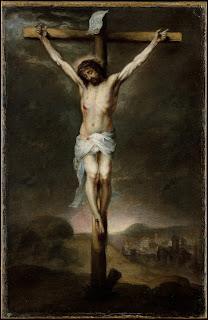
Now, this particular moral outlook of Christianity has a metaethical process that its initiators must go through in order for them to even participate in its game. The detail of this process is beyond the scope of this essay, and I have dealt with it elsewhere. Concisely, this is the metaethical process of initiation. That there are rules by which one can live well if they follow them does not mean that one can actually follow the rules. One can live well if they only eat organic food, have no work-related stress, and have access to preventive care by the best doctors in the world. But it is practically impossible for most, if not all, of us to follow this regimen. The idealization of good life is eternal (or infinite) life in which one lacks nothing that is conducive to living well. Naturally, mortal beings have no access to this kind of life precisely because, by their natural constitutions, they cannot follow the regimen or rules for attaining eternal life. Christianity identifies the source of this predicament as being detached from God, the very source of eternal life, which is metaphorically explained in terms of consuming fruits of the tree of knowledge of good and evil and, thereby, acquiring our own normative standards (moral outlooks) that come short of ideal well-being (eternal life). Accordingly, our concept of goodness is always veiled by our imperfection (mortality). This is the original sin. The crucifixion is meant to make it possible for us to break the old habits (imperfect moral outlooks) by nullifying the original sin, and this is achieved by the God-figure, Jesus, dying on the cross at our witness. The death of God is the performance that should shock us into being nihilistic about our capability to form any viable concept of goodness: our highest concept of goodness, God, is not promising after all! In this way, we acknowledge that, no matter how assured we feel with our highest conception of goodness, we must be wrong. This is the confession of sin. The rest of the process is God imbuing His life (way of perceiving the world) into us and gradually changing our moral (and cognitive) outlook from within (John 20:22; 1 Corinthians 15:45). Yet, none of this imbued life is spiritual in the sense that it is beyond reason. Rather, this life, whatever it may be, must be the most reasonable and logical way of interacting with nature (John 1:1). *On the side note, this view implies that zoe and bios are of the same nature, only different in amount.
On this view, Christianity is a form of virtue ethics where its followers are inwardly transformed into agents with dispositions capable of living well or right—whereas the end-happiness (eudaimonia) is the purpose of living by its moral outlook (covenant). Jesus as the embodiment of God is the virtuous role-model demonstrating what it is to live by the appropriate moral outlook. We are to engage in it because this moral outlook is the most promising strategy for increasing the chance of one’s survival, one’s well-being—eternal life. One engages in this moral outlook by denying one’s own concept of good and evil and living passively as to be all-loving and all-caring, for how could one judge others if they realize that their own best conception of good is a hamartia?
One surprising outcome of this virtue ethicist reading of Christianity is that the personal identity of a Christian, i.e., of a believer, is the function of the sanctioning activities of the community (church) by the very social phenomenon of holding one another responsible—just as one’s identity as a person (conscious being) is determined and sustained by the community activity of normative treatments. That is, just as there is no person (moral agent) apart from the socio-political community, there is no Christian apart from the church. To be a Christian, one must belong to the church. If so, a church is more than just an institutional gathering where individual believers visit to engage in various worship services that enhance their own sense of faith; the primary purpose of church-visit is not to provide a space where each individual reaffirms or builds their personal relationship with God, for there is no personal relationship apart from the community relationship in the first place; strongly put, the personal relationship with God is mediated by the community relationship among the members who gathered together to maximize their chance of living well. The primary purpose of church and church-visit is to hold one another accountable by holding each other committed to living by the moral outlook of Christianity, to acknowledging the nihilistic condition of our best conception of goodness, i.e., refraining from judging others—for this is the only proper way for the virtue process (sanctification) to take place in us, transforming our dispositions into divine. It is only by living out this moral outlook could Christians be the light of the world, the role-models to benchmark for the rest of the world (Matthew 5:14-16).
There is a proper sense in which norms (moral codes) are extra-physical. As explained, morality is metaphysically physical and can be described in scientific terms (as a strategic plan for increasing the chance of survival, as in terms of game theory). Ultimately, the actual agentic aspects of morality can be (explanatorily) reduced to physical matters (which are, for the time being, subatomic particles). Yet, the taking of the stance which generates morality is a peculiar incident, and such a phenomenon does not take place until humans emerge. (Stance-taking is a human phenomenon.) Just because morality arises from and is reducible to subatomic particles does not mean that there is no distinct feature of morality that can only be considered at the socio-political level of description. Economic phenomena lose all their interesting features if they are described in terms of subatomic particles (Fodor). This is because economics as a special science has a specific task; it is to account for the economic aspect of the physical world. Similarly, morality loses all its interesting features if described in terms of lesser categories because moral science, or ethics, has the specific task of accounting for the normative aspect of the world, the going-about in the space of reasons. The workings of morality (spirits) are in the world and are made up of things that are of the world, but are in some sense not of the world, rather are hovering over its surface (Genesis 1:2; John 20:22). This is perhaps the source of our deep impression that spirits are somehow beyond physical, which is mistaken to be a metaphysical intuition.
Reference
David Lewis, “New work for a theory of universals (1983).
Thomas Kuhn, The Structure of Scientific Revolutions (1962).
Willard V. O. Quine, “Two Dogmas of Empiricism” (1951, 1961).
Mark Lance and H. Heath White, “Stereoscopic Vision: Persons, Freedom, and Two Spaces of Material Inference” (2007).
Peter Strawson, “Freedom and Resentment” (1963)
Robert Brandom, Making it Explicit (1998)
Daniel Dennett, The Intentional Stance (1987).
Jerry A. Fodor, “Special Science (Or: The Disunity of Science as a Working Hypothesis)” (1974).
Comments
Post a Comment